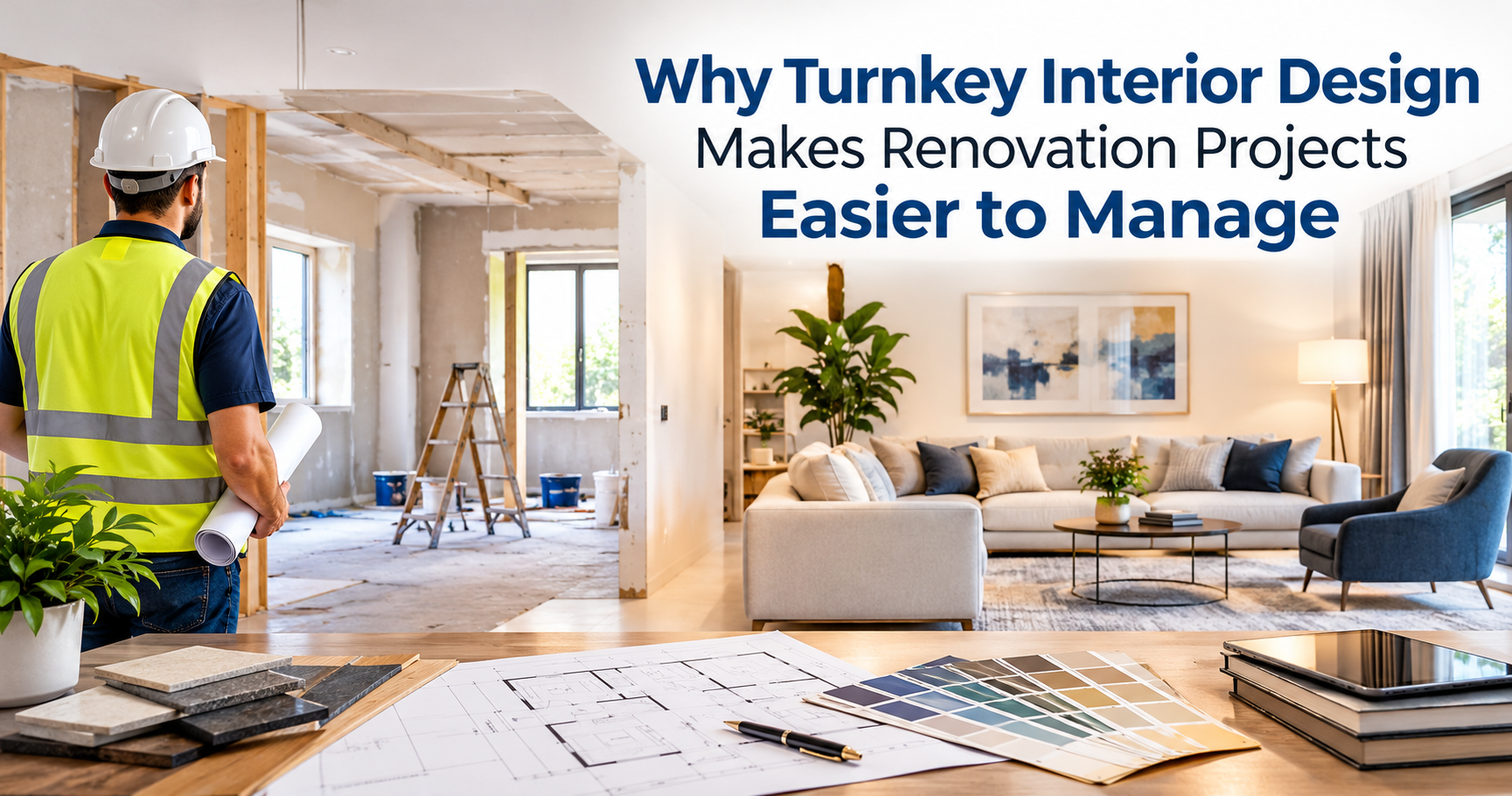

Renovating a home or commercial property is far more than picking out colours, furniture and flooring. As the property owner, you need to manage the workers, compare bids, divert deliveries and make decisions as life goes on. Even a simple renovating project can be stressful if it’s not properly coordinated.
With the turnkey interior design, all these responsibilities are brought together in one team. The team coordinates the work that is agreed to and takes the owner through each step of the project from the start to the finish. This is a more straightforward method to organise, monitor and complete renovation projects.
One Team Takes Responsibility
The usual renovation process involves the homeowner having to recruit individual designers, contractors, electricians, carpenters and suppliers. There are different roles for each professional but someone has to tie him all together.
That coordination is managed by a turnkey team. The owner is in constant contact with a central point of contact who is aware of the design, schedule and execution needs.
Clear Planning Results in a Good Start
As long as everybody is aware of the project before it starts, it makes renovation easier. A team that can be put together on a dime analyzes the area, takes into account the homeowner’s needs, and can devise a plan.
The team makes connections between design decisions and measurements, materials and installation requirements. For example, if the kitchen appliances are determined during early design, the sizes of the cabinets and electrical connections can be determined accurately. Clear planning also enables the owner to be aware of what the project encompasses. With this preparation, rushed decisions are prevented and unnecessary changes occur not during construction.
Budget Tracking Becomes More Manageable
Renovations can be hard to track when they’re done by separate contractors. Owners can get a number of quotes, each with varying assumptions, exclusions, and payment plans.
A turnkey option puts the agreed upon costs within a coordinated budget. Prior to the owner’s commitment, the team will discuss material selection, work hours, and scope of work. While the project is being implemented, the project manager keeps track of costs and makes discussion with the project team about changes. Even if some unexpected factors may push up the expense, proper budget tracking assists the owner in understanding the impact of each decision and keeps a check over the expenses.
A Coordinated Schedule Reduces Delays
Renovation works are dependent on each other. Sometimes, electrical work has to be done before painting, or carpentry before furniture is installed.
Once the owners decide to for a turnkey interior design service, then one team sets up all these dependencies or schedules the work in a logical sequence. The project manager also monitors the delivery dates and reschedules activities if materials are late. This coordination allows for better utilization of the workers’ time and minimizes the time lost between the various appointments, installations and finishing work.
Owners Spend Less Time Managing Details
It can take time to own and work on a home improvement project, especially if you own the home and have other things to do, such as raising kids. It can be all day long from phone calls to suppliers, and making sure that measurements are taken and access is granted to the site. These are mundane tasks and decisions that are made by a turnkey team at the right time. The owner is still responsible for approving the design, materials, and changes, but the team takes care of the follow through. It also enables the owners to remain engaged without having to oversee each delivery or answer minor questions for them.
Material Selection Supports the Whole Design
Selecting individual materials may lead to difficulties in colour, size, durability and availability. The beauty of the finish might complement the design, but it may need a maintenance routine that doesn’t fit in with the owner’s lifestyle.
These factors are all thought about by a turnkey team. Designers make recommendations for options that complement the design; execution specialists review the installation needs. Procurement staff verifies availability and delivery time. This collaborative method enables owners to find out informed choices and minimizes the threat of getting products that look great but become a hassle in the end.
Regular Checks Improve Quality Control
The quality will rely on the integration of the various elements of the renovation. A project who is said to be turnkey the project manager monitors the work during execution and observes that the work is in line with the agreed specifications. The team can detect uneven finishes, dimensioning problems, or installation problems before they become an issue for subsequent jobs. Periodic check-ups also help achieve uniformity in the rooms. Owners receive a formal process for reporting issues, making corrections and ensuring that the completed space matches their approved plans.
A Structured Handover Simplifies Completion
The last stage should help the project to come to a final and clear conclusion. A turnkey crew inspects the area with the owner and documents excellent items, while making the necessary corrections.
The team can also place the focus on maintenance needs and give the necessary product information. In this way, the owners are able to get a feel for their new space and iron out any lingering worries. When planning, communicating, budgeting, and executing works are perfectly coordinated, turnkey interior design becomes easier to manage from the beginning discussion to the end of the project.
Conclusion
Turnkey interior design is the job of improving the interior space of a room and saving the time, money and efforts which are normally spent in planning, budgeting, coordinating and quality checking the work. Owners have improved communication, control and a reduced number of daily actions. They would not have to worry about making wrong decisions and will have a smoother experience by having experienced professionals manage each stage of the project, resulting in a space that is practical, comfortable, and beautifully finished.